

Lynn Heller and Bonnie Norman
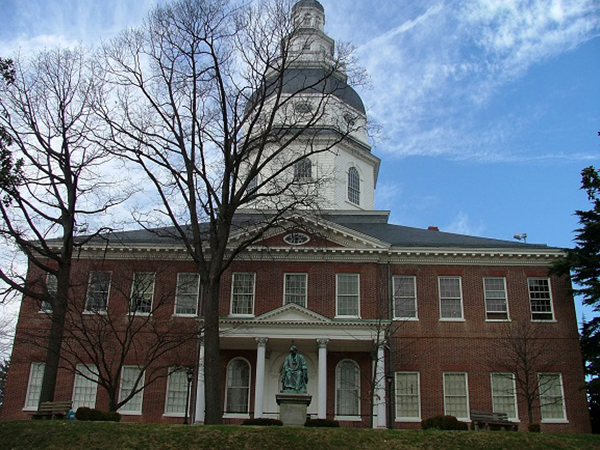
A bill before the Maryland General Assembly could dramatically improve the economic and environmental future of Maryland.
Large local companies and technical training organizations are touting the bill’s ability to create tens of thousands of in-state jobs in construction, installation, maintenance and manufacturing. Students are rallying for its passage to mitigate the future impacts of climate change, while environmentalists and health care advocates welcome the push for cleaner air.
The 2019 Maryland Clean Energy Jobs Act (CEJA) would increase Maryland’s use of renewable electricity sources like wind and solar, replacing dirty energy and reducing greenhouse gas emissions. The bill is projected to create 20,000 new quality jobs and help trigger billions of dollars invested in our state. As two women who work to accelerate energy efficiency and clean energy investment in Maryland, we are strong proponents of this legislation.
How would CEJA work? By doubling Maryland’s Renewable Portfolio Standard (RPS) — the percentage of Maryland’s energy consumption that must be generated from renewable sources — to 50 percent by 2030. When the state requires more renewable energy consumption, the market responds by demanding more renewable energy, which drives the price down as more supply is built. When more renewable energy is built, more jobs are created.
Part of this economic equation is renewable energy certificates (RECs), which are tradeable renewable credits. One REC is generated every time one megawatt-hour of renewable electricity is produced. Solar renewable energy certificates, or “SRECs,” are RECs generated from solar power and have a market-determined cash value, thereby helping to finance the solar project. By doubling Maryland’s RPS from 25 to 50 percent, the Maryland Clean Energy Act would increase the demand for and price of SRECs because there is a specified threshold or “carve out” for solar that must be met along with a high penalty for not achieving it.
Higher SREC prices, correlated with higher RPS standards, create higher returns for solar project developers or owners, making investing in new solar projects more attractive and helping to create new clean energy jobs. (Already, Maryland’s offshore wind program is delivering on its promises: investing over $1.8 billion in the state and creating nearly 5,000 new jobs.)
When SREC prices are low, as they currently are in Maryland, overall project economics are more challenging, which can drive solar developers to invest in states with higher RPS standards and higher SREC prices.
Falling behind
We cannot allow Maryland to continue to fall behind other states in the competition for investment dollars. By increasing our RPS, we can ensure renewable energy projects get built here. Unless the economics of building these projects makes sense for solar companies — from how much projects cost to build to how much revenue they can expect — the projects won’t get built, and the economic benefits won’t be realized.
There is another force behind this domino effect: green banks. These banks aren’t traditional “banks”— they are public or nonprofit finance entities that leverage innovative financing techniques and partnerships with the private sector to accelerate the use of renewable energy technologies and energy efficiency solutions.
And they are highly effective. Since 2011, the United States’ first green bank, the Connecticut Green Bank, has supported the creation of 16,000 direct and indirect jobs, reduced greenhouse gas emissions by nearly one million tons, and created nearly $8 of private investment for every $1 of public funds.
Maryland is home to three green banks — the Maryland Clean Energy Center, the Montgomery County Green Bank, and the Climate Access Fund — that are working to leverage private capital across the state. When it comes to solar development, their ability to leverage additional private investment is severely limited by the state’s current SREC market.
The consequences of inaction on this legislation are clear. We will have another year of overreliance on pollution-causing fossil fuels and the continued acceleration of climate change — with all the damage that entails.
We will also leave money and investment opportunity on the table, including in distributed energy technologies, such as Solar PV, that enable a more resilient grid during extreme weather events.
Furthermore, while Maryland’s solar industry had employed over 5,000 Marylanders in past years, studies show we lost over 800 solar jobs in 2018. The Trump administration’s tariffs on solar and other industries are contributing to this decline, as is the uncertainty around Maryland’s current Renewable Portfolio Standard, which is set to expire in 2020.
Our state leaders must strengthen our future by passing a strong Clean Energy Jobs Act.
Lynn Heller is founder and CEO of the Climate Access Fund in Baltimore. Bonnie Norman is president of E3 International and board vice chair of the Montgomery County Green Bank. Both are members of the Maryland LCV board.