Energy/Water Management and Resilience Strategies - For Prosperity
Understanding our client’s priorities and operations guides E3I’s development of bankable strategies for energy and water management, security, risk reduction, and reliability--across an enterprise or geography. E3I provides money-saving solutions for buildings across sectors and, for infrastructure, at the nexus of energy and agriculture, water, waste, transport, industry, education and healthcare to build resilience--including microgrids.
Representative Examples:
 The scope of the project was to develop a smart grid pilot project to improve the resiliency of the Polytechnic University of Bucharest (UPB), including identifying and evaluating the appropriate smart grid and intelligent building technologies for UPB (including distributed generation assets – PV and gas engines, energy storage technologies, building energy efficiency measures, energy distribution system monitoring and control systems, public lighting technologies and electric vehicles applications), define the optimum configuration and operation of these assets to minimize energy costs to UPB, and develop the scope for a pilot project to serve as a test of the application and benefits for a smart micro grid approach.
E3I performed the technical and financial due diligence to evaluate opportunities for expanding the existing generation capacity, implementing tri-generation approaches, diversifying energy supply resources (i.e., fuel cells, wind, solar PV, micro turbines, etc.), including storage systems (i.e., battery, thermal storage), and maximizing the use of smart building technologies (i.e., plug load control, advanced lighting technologies). The multiple dispersed generation sources and ability to isolate the microgrid from a larger network would provide highly reliable electric power to UPB. E3I quantified costs and benefits of the microgrid and made financial and technical recommendations for implementation, creating specifications for competitive bid tendering of the university microgrid.
 Hospitals face many challenges—insurance reimbursement, staff shortages, treating the uninsured, replacing aging equipment, adapting to new health care regulations —so that energy efficiency may not be a top priority. Rising energy costs are beginning to change that, however. Hospital energy costs have been rising from 15-25% annually, on average, for the past few years in the USA. As budgetary pressures mount, hospital administrators are discovering that energy efficiency offers a cost savings opportunity they cannot ignore. Every dollar a nonprofit healthcare organization saves on energy is equivalent to generating $20 in new revenues (assumes 5% NOI).
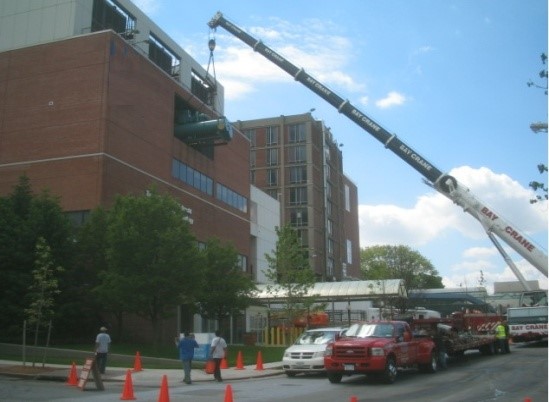 auditing and facility benchmarking using its real-time web-based energy monitoring system – Nextep Solution - to identify low cost, high return energy saving opportunities as well as longer term capital investment opportunities in sustainable energy, culminating in a Strategic Energy Management Plan for the C-level supported by the facilities management staff with energy savings redirected to support healthcare delivery excellence.
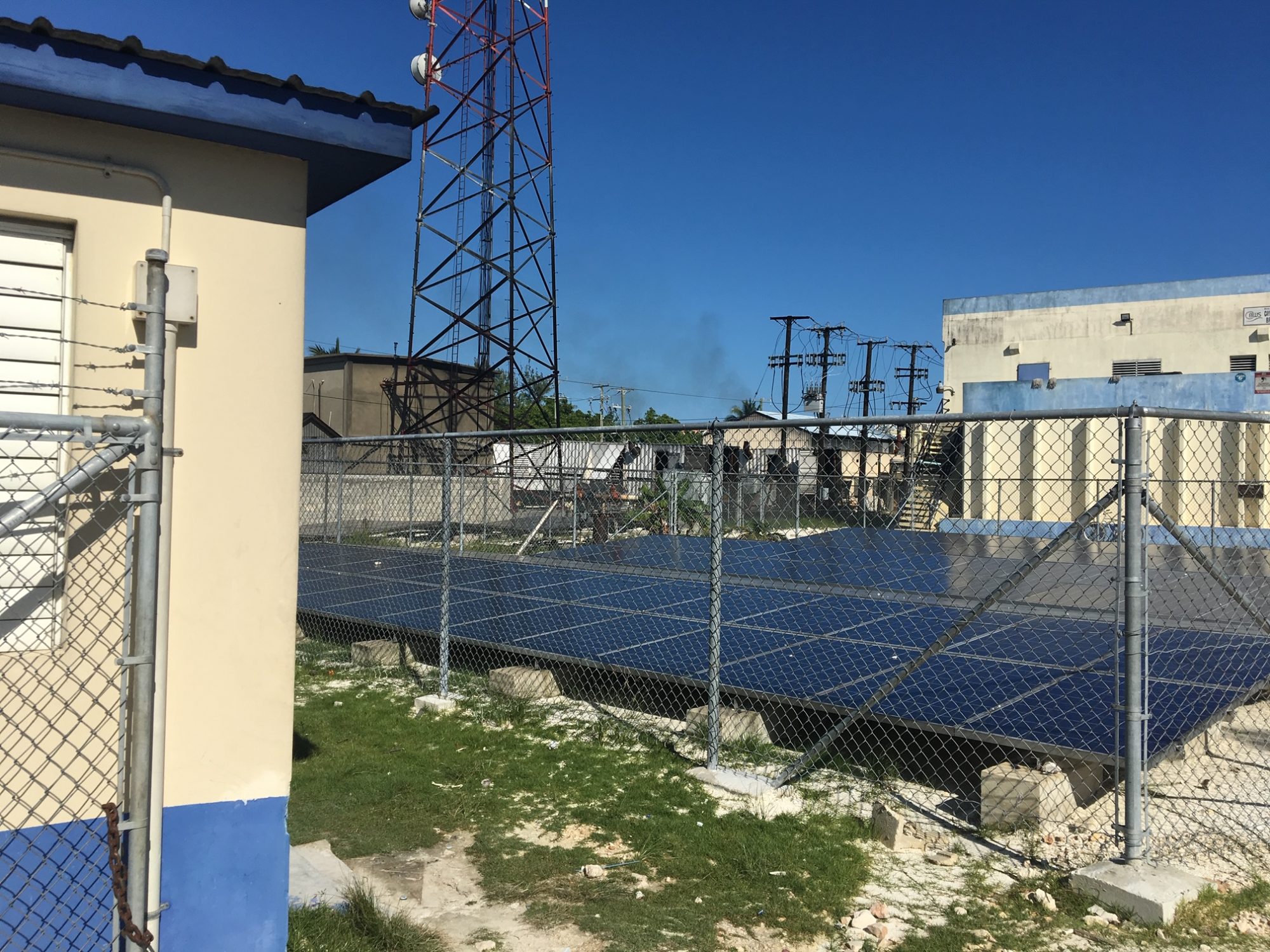
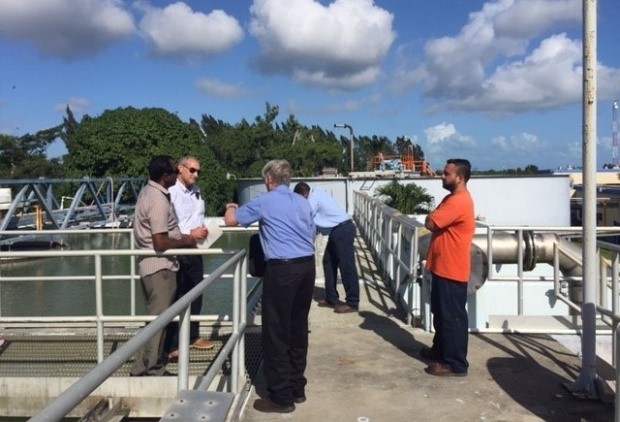 E3 International (E3I) is partnering with Belize Water Services (BWS), a private company majority-owned by the Government of Belize, to identify opportunities to reduce operating costs and environmental impacts through the implementation of sustainable energy solutions for potable and waste water treatment under a United States Trade Development Agency (USTDA)-funded contract. E3I is engaging with stakeholders both internal and external to Belize Water Services, including the Ministry of Energy, Science and Technology, and Public Utilities, to optimize its feasibility study results and serve as a model for future clean energy projects throughout the Caribbean and Central America.